
By the Dropship Stair team. Last reviewed: November 2026.
Key takeaways
- The best Shopify smart home stores are online smart home brands built on Shopify that sell cameras, lights, locks, and hubs with clear compatibility badges and install steps that help buyers set devices up without a pro.
- Compatibility is the first buying question, because a device that does not work with Alexa, Google Home, or Apple Home is a return waiting to happen.
- Install difficulty ratings and setup videos cut support tickets, because buyers who know the job is easy will buy, and buyers who know it is hard will hire help instead of returning the product.
- Every store below runs on Shopify, so the design patterns here can be copied by a new smart home store without a custom platform.
Cameras. Lights. Gadgets. All set up without a pro. The best Shopify smart home stores sell tech a buyer can install alone, with clear compatibility and honest install steps. The seven stores below? Lighting, security, control brands. Each one turns smart home tech into a simple buy a different way.
Compatibility first. Product second. That is smart home gear in a nutshell. Will this bulb work with Alexa? Does this camera work with Google Home? Does that lock need a hub? Buyers need those answers before they pay. The best Shopify smart home stores put them on the product page. Badges. Setup steps. Honest install times. No need to call support first.
What makes the best Shopify smart home stores convert?
Two questions. Every buyer asks them. Will this work with my system? Can I install it myself? The best Shopify smart home stores convert because they answer both, fast. Compatibility badges. Install steps. Real setup times. Put those on the page and a buyer can order with confidence. Leave them off? That buyer goes to a store that answers.
Three patterns. They show up in almost every one of the best Shopify smart home stores. First, compatibility at a glance. Badges for Alexa, Google Home, Apple Home, SmartThings, and Matter on every product page. Second, install help built into the store. Difficulty ratings. Videos. Step-by-step guides. Third, bundles that build a system. A camera plus a doorbell. A hub plus sensors. Smart home buyers rarely buy one device and stop.
7 best Shopify smart home stores to study
Seven stores. Each one of the best Shopify smart home stores. All selling smart home gear at scale. Study what each of the best Shopify smart home stores does best, then copy the pattern that fits your own store. One pattern. Start there.
1. Nanoleaf
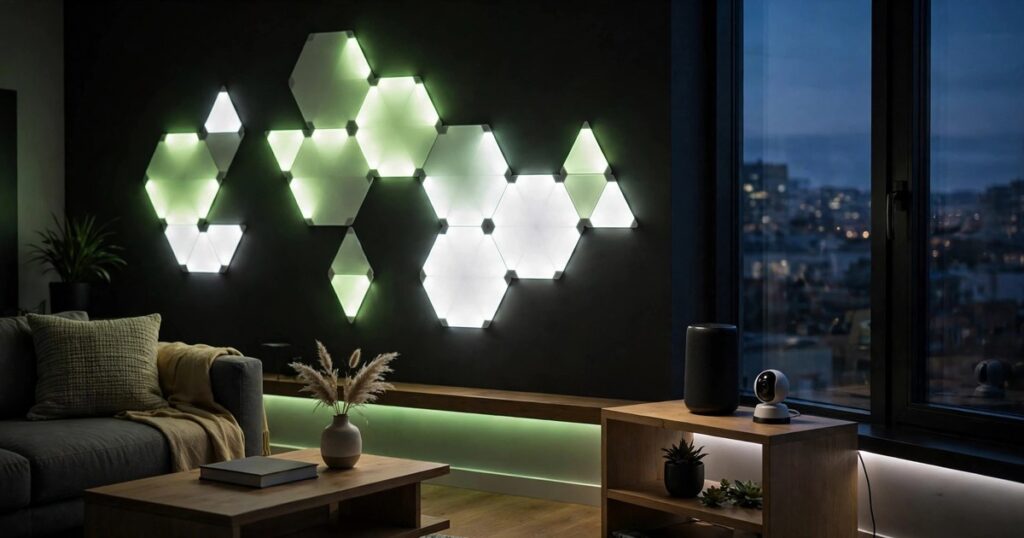
Design leads. Nanoleaf sells modular smart lighting panels, bulbs, and strips, and the store leads with how good they look. The light panels are decor as much as tech. Product pages show them in real rooms with scenes and schedules. The lights work with Apple HomeKit, Google Home, Amazon Alexa, and Samsung SmartThings, and Matter-enabled models are marked clearly. Lesson: beauty sells lighting. When a smart light looks good on the wall, the tech becomes a bonus, not the pitch.
2. Wyze
Cheap, but clear. Wyze sells affordable smart home cameras and devices, and value leads the store. Cameras offer 1080p to 4K video with motion detection. The store makes it easy to compare models side by side. Product pages include an installation difficulty rating, which helps a DIY buyer feel sure about setup. Lesson: price plus clarity wins. When a buyer can see the camera, the price, and the install effort in one place, the decision is easy.
3. August Home
The front door is the pitch. August Home sells smart locks and keypads, and the store leads with the door itself. The locks retrofit over existing deadbolts. A renter or a homeowner can install one without changing the door hardware. Product pages explain auto-unlock, guest access, and keypad options in plain words. Lesson: retrofit is a selling point. When a lock fits the door a buyer already has, the buy feels low risk.
4. Ezlo
The system is the story. Ezlo sells smart home hubs, thermostats, and security devices, and the store leads with how it all fits together. Product pages explain how the hub ties devices together. That matters when a buyer wants one app for the whole home. The store groups products by room and by job, like security or climate, so a buyer can build a system step by step. Lesson: the hub is the story. When the store shows how devices work together, the buyer buys more than one device.
5. Brilliant
One spot on the wall. Brilliant sells smart home control panels that replace light switches, and control leads the store. The panels give touch and voice control over lights, music, and locks from one spot on the wall. Product pages show them installed in real homes. The store explains compatibility with the major platforms up front, which matters for a device that sits at the center of a home. Lesson: one control point sells the system. When a buyer sees the whole home on one panel, the price makes sense.
6. blurams
Simple security. blurams sells smart home security cameras, and the store leads with keeping it simple. Product pages explain video quality, motion alerts, and indoor and outdoor use in plain words. No heavy tech jargon. The store keeps the catalog focused, which helps a buyer who just wants a camera that works. Lesson: focus sells security. When a store does one job well, a buyer who needs that job trusts it fast.
7. LIFX
No hub. No hassle. LIFX sells smart bulbs, lightstrips, and lamps, and the store leads with color and no hub. The bulbs offer billions of colors. They connect by Wi-Fi with no hub required. They work with Apple, Google, Alexa, and SmartThings, with Matter support on newer models. Product pages show the lights in real rooms and explain setup in three steps. Lesson: no hub is a feature. When a buyer can screw in a bulb and go, the first smart home buy feels easy.
What the top smart home stores have in common
Different looks. Same few patterns. The stores above look different, but they share the same playbook. The table below shows each store, what it sells, and the one pattern worth copying from it.
| Store | What it sells | What to copy |
|---|---|---|
| Nanoleaf | Modular smart lighting | Design-led photos in real rooms |
| Wyze | Affordable cameras and devices | Install difficulty ratings on product pages |
| August Home | Smart locks and keypads | Retrofit as a low-risk selling point |
| Ezlo | Hubs, thermostats, security | System stories that sell bundles |
| Brilliant | Smart home control panels | One control point for the whole home |
| blurams | Smart security cameras | A focused catalog in plain words |
| LIFX | Smart bulbs, strips, lamps | No hub setup as a feature |
See it now? The best Shopify smart home stores win by answering compatibility and install questions before the buyer asks them. Badges. Setup steps. Difficulty ratings. Bundles. Each one lowers the risk of a smart home buy. Copy the pattern that fits your products. Skip the ones that need a huge catalog or a famous brand behind them.
How do you build your own smart home Shopify store?
Start with the buyer. Not the catalog. The buyer. Pick a clear niche. Smart lighting. Home security. Keyless entry. Then build the store around the questions that niche asks. A focused niche makes building one of the best Shopify smart home stores easier, from compatibility badges to setup guides to marketing. Our guide on the best dropshipping niches explains how that focus works. And smart home? A category where focus pays off fast.
Then build product pages that answer compatibility first. Badges for Alexa, Google Home, Apple Home, SmartThings, and Matter. Install steps and difficulty shown plainly. Setup guides in plain words. If you dropship smart home gear, order samples first. Why? Setup, app pairing, and voice control decide whether buyers come back. Our guide on best products to dropship covers how to vet products before you commit, and our best Shopify electronics stores roundup shows more tech-first design patterns worth copying.
Finally, plan how buyers will find you. Smart home sells on proof. Setup videos. Before-and-after room clips. Voice control demos on YouTube, Instagram, and TikTok. Those matter more than text ads. Show the device working in a real home, in real light. Let buyers see the home they want to build. If you want your store built to the standard of the best Shopify smart home stores, see our pre-built Shopify store options, or contact us to talk about your store.
Frequently asked questions
What makes a smart home Shopify store successful?
A winning smart home store answers two questions fast. Will this work with my system? Can I install it myself? It shows compatibility badges, install steps, and real setup times. Clear answers on those two points cut support tickets and returns. And they turn first-time buyers into repeat customers.
Do smart home devices need a hub?
It depends on the device. Many Wi-Fi devices, like LIFX bulbs, connect straight to your router with no hub at all. Others, like some locks and sensors, need a hub for remote access. Check the product page before you buy. And look for the words no hub required.
Can I dropship smart home products on Shopify?
Yes, you can dropship smart home products, but order samples first. Test setup, app pairing, and voice control, because a device that fails setup gets returned fast. Confirm warranty terms and shipping costs with your supplier. And be honest about which systems each product works with.
What is Matter, and why does it matter for smart home stores?
Matter is a shared standard that lets smart devices from different brands work together in one home. So a buyer is not locked into a single brand. Show Matter support clearly on product pages, because buyers who know the word look for it first.
How do I pick a niche for a smart home store?
Pick one room or one problem. Smart lighting, home security, or keyless entry. Then build the store around that buyer. A narrow niche makes compatibility clear and your marketing sharper than a general gadget store that tries to sell every device at once.
Trust, not tricks. That is how the best Shopify smart home stores win. Compatibility badges. Install steps. Difficulty ratings. Bundles. The patterns work, and they work for a new store just as well as for a big one. Start with the patterns that fit your products. Build from there.
Sources: the Dropship Stair guides linked in this article, and Shopify store listings and store homepages checked during research in November 2026.
Last reviewed: November 2026.